
You know that stubborn belly some people call a dad bod, love handles, muffin top — or dunlaps? What, you’ve never heard of dunlaps? That’s what you call it down south when your belly dun lapped over your belt! If you’ve ever wondered why that weight sticks around no matter what, Wheat Belly by William Davis might give you a new angle to consider.
I didn’t originally pick up this book for you — I read it for myself. Now, five years after my reflux healing journey, I’ve noticed the weight that I unexpectedly lost isn’t staying off so easily anymore — who knows, maybe because I’m in my mid-forties. I wanted to figure out if I need to hit the gym or if I could perhaps rethink some of my dietary habits.
Dr Davis argues that modern wheat is the hidden driver behind visceral belly fat, claiming it spikes your blood sugar worse than table sugar and keeps you stuck in a cycle of cravings and fat storage. After reading it, I was surprised to see it does touch on IBS and reflux, albeit lightly. But considering its possible impact on your waistline — and the way excess belly fat can add pressure to your gut and link up with other gut health issues — there are some potential reflux-related benefits here worth exploring.
👉 Bottom line: It’s worth a look if you’re curious how cutting wheat might help your own wheat tummy— or how it could connect to celiac, autism, schizophrenia, diabetes, mood disorders, skin issues, and more. Many of these do go hand-in-hand with reflux. That said, just keep a critical eye, and don’t expect it to be a reflux specific healing plan.
✅ Pros
- Strong case for wheat’s blood sugar & belly fat link
- Well-explained science with relatable stories
- Good wheat tips for hidden gluten issues
❌ Cons
- It’s not a reflux specific book
- Sweeping disease claims need more scientific evidence
- Can feel alarmist at times but offers good food swaps
📘 My Full Review
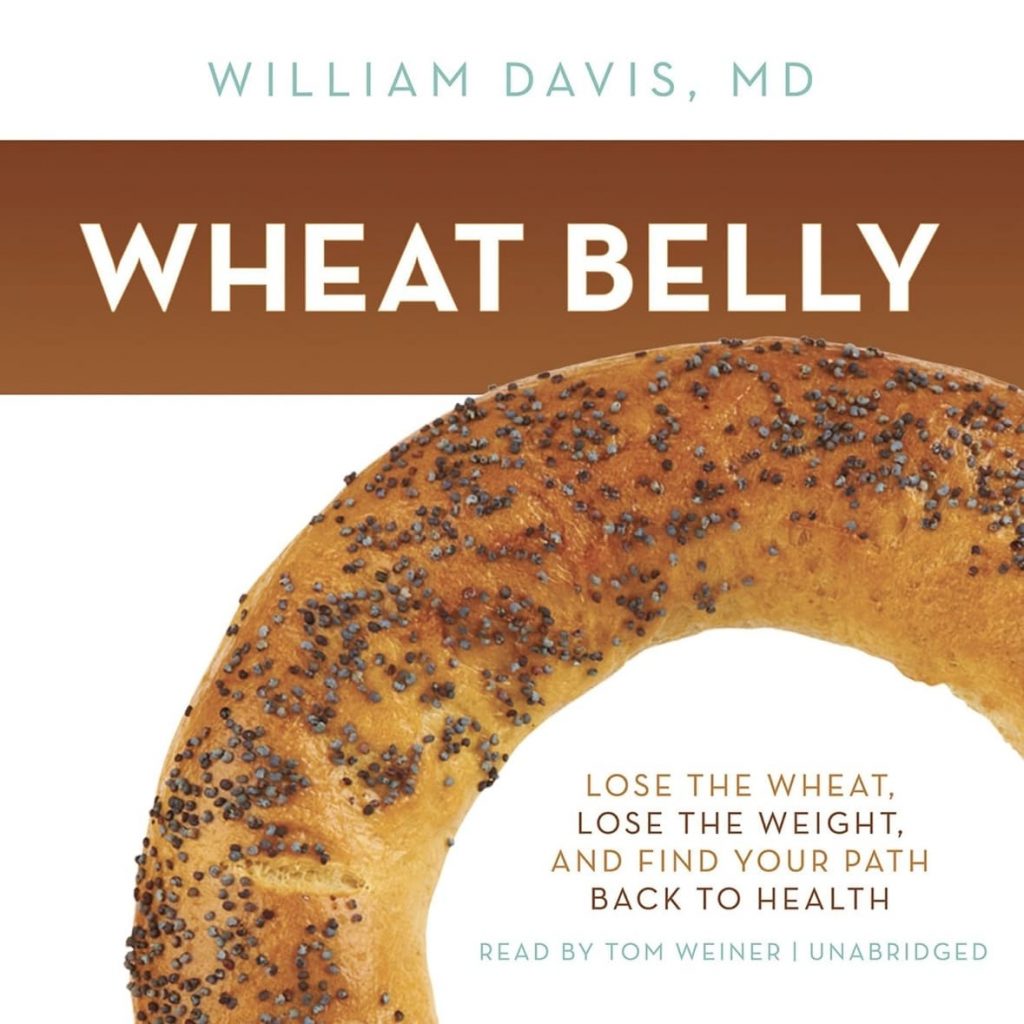
The core premise of the book is that today’s wheat is nothing like the grains of the past. Davis explains how selective breeding created a Frankenstein crop — a high-chromosome, short-stalk, large-headed wheat that can’t even survive in the wild without human help.
According to Davis modern wheat is loaded with increased gluten and amylopectin A — a unique starch that spikes blood sugar faster than pure sugar and is poorly digested. He makes the case that this isn’t just about extra pounds but about stubborn visceral fat that drives inflammation, metabolic chaos, and hormonal shifts — he claims it can boost estrogen enough to cause the ultimate man bod accessory, the man boob. And if that’s not enough, in extreme cases the visceral fat driven estrogen spike can even lead to male lactation.
While Davis focuses mostly on eliminating modern wheat entirely, it’s worth noting that some people experiment with with what’s known as heritage or ancient grains like einkorn or spelt to see if they’re gentler on the gut and blood sugar.
He also dives into wheat’s addictive side: he says the gliadin protein in wheat breaks down into exorphins that bind to your brain’s opioid receptors, possibly explaining why so many of us seemingly lust bread, cookies, and pasta on infinite repeat — even when we know that none of them love us back. He even shares examples of schizophrenia patients whose symptoms worsened with wheat and improved with opioid-blocking medications — highlighting just how powerfully these exorphins may hook the brain.
The book also spends time connecting wheat to auto-immune issues, IBS, diabetes, skin problems, mood disorders, and even aging — all woven together by his argument that constant high blood sugar and inflammation create a perfect storm.
If you’re new to gluten-free eating, his practical tips stand out — from spotting hidden wheat in sauces, gravies, or cosmetics to keeping an eye out for cross-contamination. But when it comes to the bigger disease claims, I do wish he’d laid out more direct quotes and research evidence so you’re not left wondering if some points are built on solid studies or loose dots connected by speculation. Still, the clear science around blood sugar, belly fat, and cravings makes a strong case for at least experimenting with less wheat if you’re feeling — well, a bit chubby.
What’s Actually Useful
Davis uses patient stories and real-life case studies to show what cutting wheat can look like in practice — especially when it comes to tackling that spare tire that so many of us are carrying around in case of emergency. These stories make his points feel real instead of just theoretical.
He also doesn’t just drop the bomb that wheat is bad and leave you hanging — his clear “eat freely, limit, or avoid” lists give you somewhere to start without feeling totally deprived. The focus on real, whole foods, spotting hidden wheat, and avoiding processed gluten-free junk is genuinely practical — especially if you’re curious whether a wheat-free, lower-glycemic approach might help you feel… well, a bit less chubby.
Where the Book Misses the Mark
That said, while the science on blood sugar, insulin, and cravings is well explained, Davis jumps to connect wheat to everything from schizophrenia to dementia — areas that really need more independent research before anyone draws sweeping conclusions. At times, I couldn’t tell if he’s protecting readers from scientific jargon by simplifying the research or if he’s stretching some findings beyond what the studies actually prove.
Also, as I’ve mentioned, the book barely covers reflux-specific issues — it’s not a reflux book, after all. If reflux relief is your main goal, keep in mind that while losing weight can help reduce pressure on your abdomen, it’s rarely enough on its own to fix the deeper root causes. That said, weight loss can still have positive ripple effects — like supporting a healthier microbial balance, which is a key factor in many digestive issues, including reflux.
Lastly, the tone can feel a bit alarmist — painting wheat as the single most dastardly villain in the modern diet. That might be true in some ways, but does it really outstrip added sugar (which is literally in everything) just because wheat’s glycemic index can sometimes exceed sugar’s? To his credit, though, Davis does offer practical swaps and clear “eat freely, limit, or avoid” lists so you’re not left wondering what to do if you decide to cut out wheat — which, like sugar, sneaks into far more foods than most people realize.
📋 Core Framework or Recommendations
Here are some of the core principles of the wheat belly diet. Just a note: there’s also a separate Wheat Belly cookbook I haven’t read, that includes more detailed meal plans and recipes if you want to dive deeper.
- Cut modern wheat completely — no wheat-based breads, pasta, baked goods, or hidden wheat ingredients.
- Eat freely from his “unlimited” list: non-starchy vegetables (except potatoes and corn), raw nuts and seeds, healthy oils (olive, avocado, coconut, walnut, etc.), meats and eggs (preferably organic/free-range), cheese, non-sugary condiments, herbs, and spices.
- Consume in limited quantities: non-cheese dairy (milk, yogurt, cottage cheese), whole fruits (focus on berries, limit tropical or dried fruits), non-wheat grains like quinoa, amaranth, or rice, legumes and soy, potatoes, corn, and fruit juices.
- Consume rarely or never: wheat products (bread, pasta, cookies, cakes, cereals), fried or hydrogenated oils (corn, soybean, sunflower, etc.), gluten-free foods made with starchy fillers (cornstarch, rice starch, potato starch), dried fruits, sugary snacks, high-fructose sweeteners, and sugary condiments.
His big idea is to focus on real, whole foods that keep blood sugar stable, crowd out cravings, and help break the “wheat addiction” cycle. The practical lists are helpful if you want a clear starting point for shopping and meal planning.
🎯 Final Thoughts on the Wheat Belly Book
Wheat Belly is an engaging — and at times polarizing — read that might get you thinking differently about how wheat and other high glycemic index foods shape your health. If you, like me, discovered bread was a surprising trigger on your reflux journey, you’ll appreciate some of the deeper connections — but as you’ve seen here, real reflux healing takes more than just ditching gluten or wheat.
As with many of the books we’ve reviewed together I’d suggest you take what’s well-supported — the clear connection between high-glycemic foods, stubborn belly fat, and inflammation — and treat the bigger, more sweeping disease claims as an invitation to dig deeper for yourself (it’s something I plan to look into more at some point too).
As I write this, I’ve been experimenting with lower-glycemic foods myself, and I’ve already noticed a reduction in my waistline and far fewer cravings throughout the day something that’s supported by many of the wheat belly before and after pictures on the amazon reviews.
Just as is it is with mine, your journey is yours alone, and you deserve practical tools that help you make sustainable, real-food changes that feel right for you.
This content is for informational purposes only and is not medical advice. Consult your physician for personalized care.
This free site uses affiliate links. If it's helpful, consider purchasing using the product links —I earn a small commission at no extra cost to you.


Don Daniels
Latest posts by Don Daniels (see all)
- Honest Review: Wheat Belly by Dr. William Davis - July 10, 2025
- GERD but No Heartburn: Critical Clues Doctors Miss - May 24, 2025
- Feels Like Something Is Stuck In My Throat? Discover Why - May 23, 2025
Its like you read my mind You appear to know so much about this like you wrote the book in it or something I think that you can do with a few pics to drive the message home a little bit but other than that this is fantastic blog A great read Ill certainly be back
Your blog is a constant source of inspiration for me. Your passion for your subject matter is palpable, and it’s clear that you pour your heart and soul into every post. Keep up the incredible work!
Every time I visit your website, I’m greeted with thought-provoking content and impeccable writing. You truly have a gift for articulating complex ideas in a clear and engaging manner.
Your writing has a way of resonating with me on a deep level. I appreciate the honesty and authenticity you bring to every post. Thank you for sharing your journey with us.
Your blog is a breath of fresh air in the often stagnant world of online content. Your thoughtful analysis and insightful commentary never fail to leave a lasting impression. Thank you for sharing your wisdom with us.